Projects

Quantum pixel representations and compression for N-dimensional images
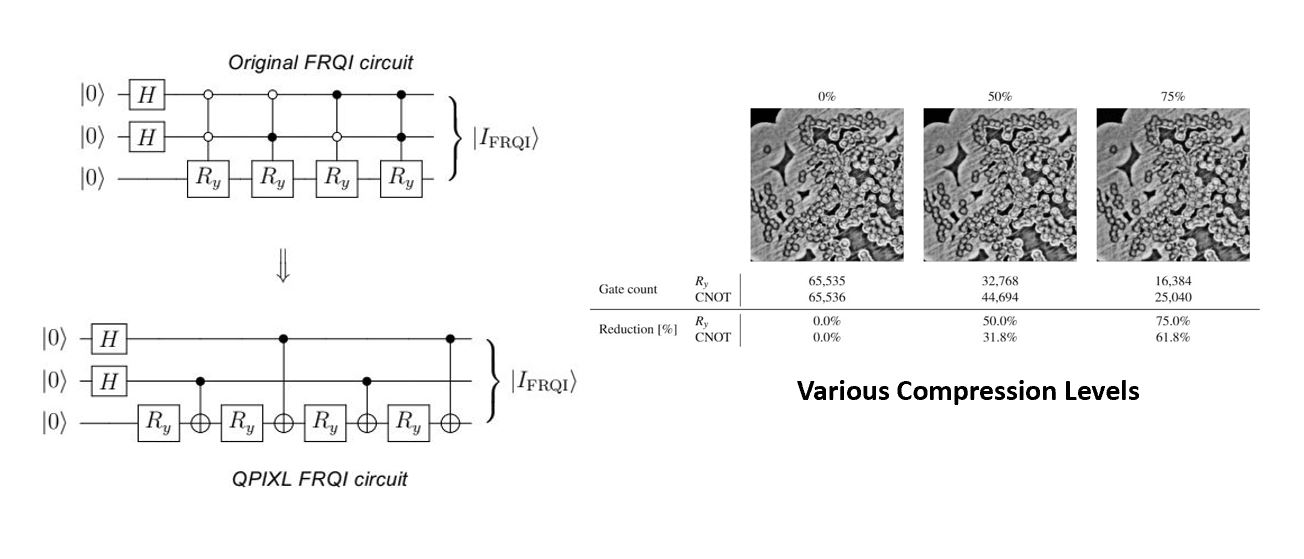
We introduce a comprehensive framework known as the Quantum Pixel Representation (QPIXL), which encompasses all previously established quantum image representations and potentially many more.

Additionally, we present a novel technique for preparing QPIXL representations that requires fewer quantum gates compared to earlier methods, without the need for ancilla qubits. This approach utilizes an efficient synthesis technique for uniformly controlled rotations, employing only RY and controlled-NOT (CX) gates, making the circuits practical for the NISQ era.

For instance, the original FRQI state preparation method for an image with N = 2n grayscale pixels uses n+1 qubits in total (i.e., n qubits for encoding the position and 1 qubit for the color) and has a gate complexity of O(N2). Recent improvements have reduced the FRQI gate complexity to O(N log2N) by introducing several extra ancilla qubits.

In contrast, our QPIXL method for preparing an FRQI state achieves a gate complexity of O(N) without requiring additional ancilla qubits. Moreover, we introduce a compression strategy to further reduce the gate complexity of QPIXL representations.

Our experiments demonstrate that this compression algorithm can reduce the gate complexity by up to 90% without significantly compromising image quality.

An implementation of our algorithms is publicly available as part of the Quantum Image Pixel Library (QPIXL++), accessible at QPIXL++.

Quantum-parallel vectorized data encodings and computations on trapped-ion and transmon QPUs
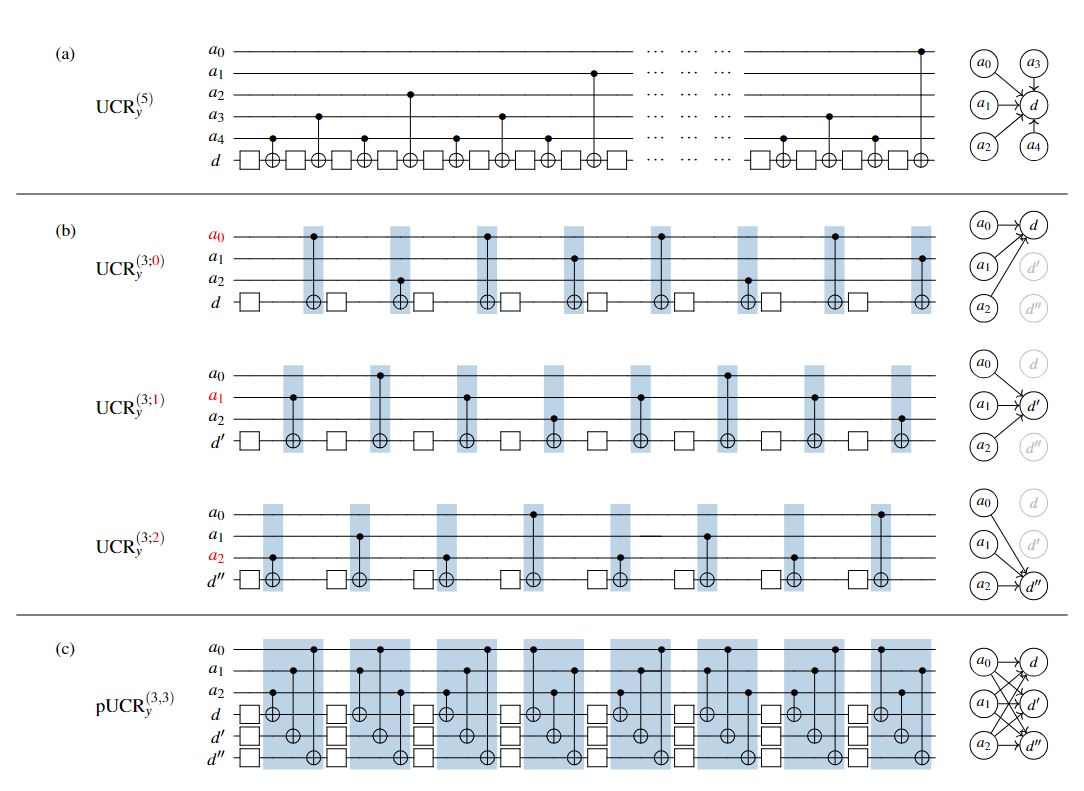
This project makes significant contributions to the problem of data encoding and the development of efficient quantum data analysis algorithms.

Firstly, we introduce an extension of the uniformly controlled rotation technique, allowing for the concurrent execution of elementary quantum gates on both address and data qubits. Building on this innovative concept, we propose two new data encoding schemes: QCRank for continuous data and QBart for discrete data in binary representation.

Secondly, we demonstrate a series of data encoding and analysis experiments using real quantum processors on an unprecedented scale. These experiments include the implementation of a Quantum Read Only Memory (QROM) applied to various data types such as images, DNA sequences, and time-series.

MYOBOLICA : Muscle recruitment analysis tool based on Bayesian statistics techniques
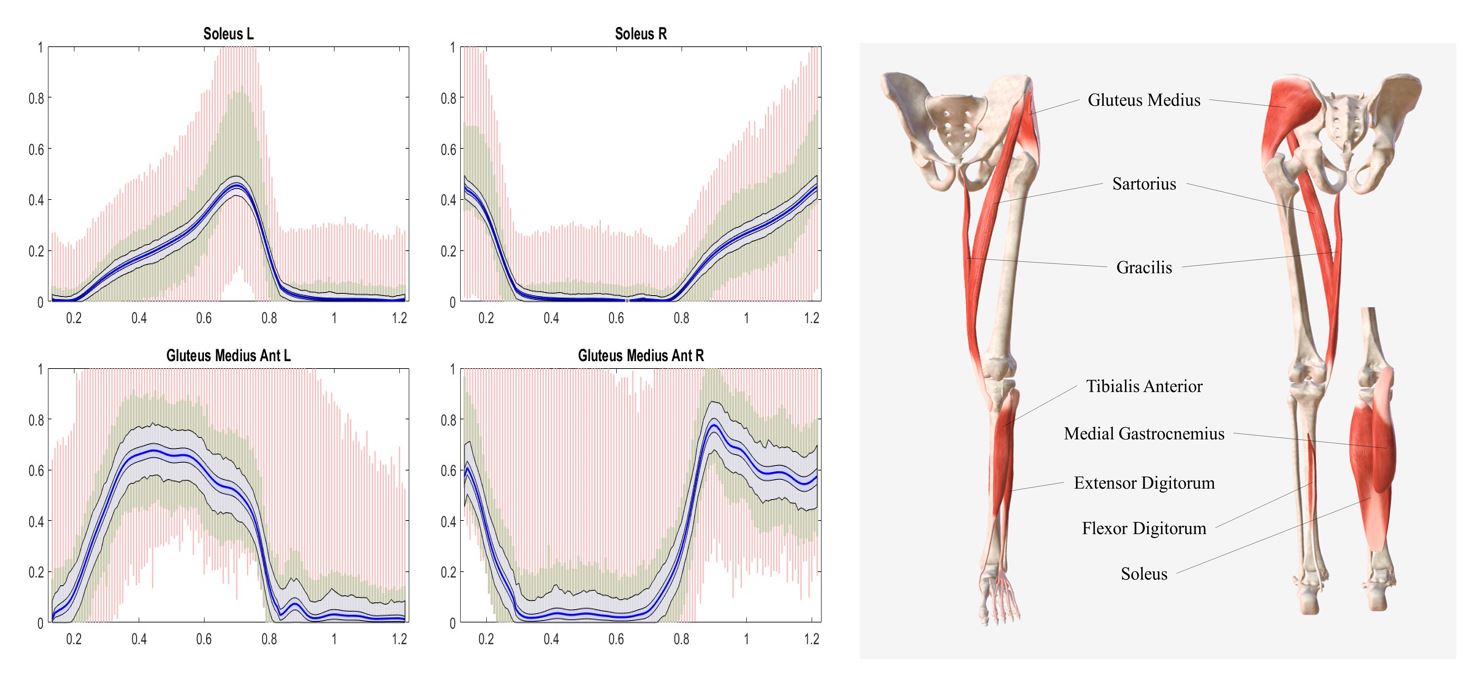
Project Summary

This project investigates the redundancy of the human musculoskeletal system, where the number of muscles exceeds the number of degrees of freedom. This redundancy allows for the performance of motor tasks in infinitely many different ways, which is essential for the system's adaptability under varying external or internal conditions, including different diseased states.

A central issue in biomechanics is understanding how the complex interplay between the central nervous system and the musculoskeletal system selects normal activation patterns and how these patterns change under abnormal conditions such as neurodegenerative diseases and aging.

To address this question, this work establishes a mathematical foundation based on Bayesian probabilistic modeling of the musculoskeletal system. Using Lagrangian dynamics, we translate observations of a subject's movement during a task into a time series of equilibria, forming the likelihood model. Various prior models, corresponding to biologically motivated assumptions about muscle dynamics and control, are introduced.

We derive and explore the posterior distributions of muscle activations using Markov chain Monte Carlo (MCMC) sampling techniques. By comparing the model predictions with actual observations, we can analyze the different priors and gain insights into muscle dynamics and control mechanisms.

Highlights

  • We introduce a Bayesian approach to investigate muscle recruitment.
  • Markov chain Monte Carlo (MCMC) is used to explore feasible solutions.
  • Longitudinal priors ensure smooth activation trajectories.
  • Potential applications include surgical planning and rehabilitation.
Paper.

Predicting Diabetes Rates using the Food Environment Atlas
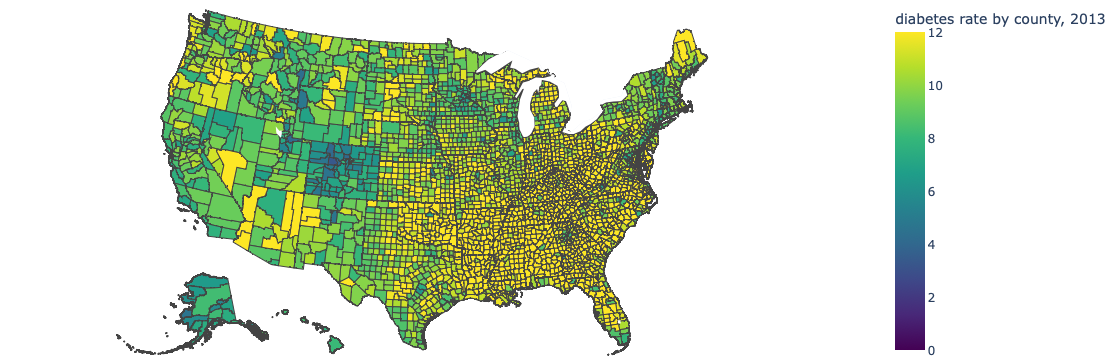
In this project, we develop predictive regression and classification models to forecast diabetes rates across different regions of the United States and identify key contributing factors. Utilizing data science tools, we predict diabetes rates based on various food environment indicators, including poverty rate, access to SNAP benefits, food stores, restaurants, and other community characteristics related to food, health, nutrition, physical activities, and socioeconomic status.

We use data from the Food Environment Atlas to make these predictions. This project holds significant value for health agencies and local governments, enabling them to allocate resources more efficiently and advocate for improved access to healthy food. Executive Summary, Code .

.